Banking in Russia for Expats: Cross-Border Capital Allocation and Compliance in 2026

CTO, Relocate Russia · 3 min read
Navigating cross-border financial logistics in the current geopolitical climate requires meticulous planning. For high-net-worth individuals and professionals relocating to the Russian Federation, identifying how to send money to Russia in 2026 compliantly and securely is the most critical phase of the transition. This guide details the current regulatory environment, KYC procedures and viable transfer mechanisms.
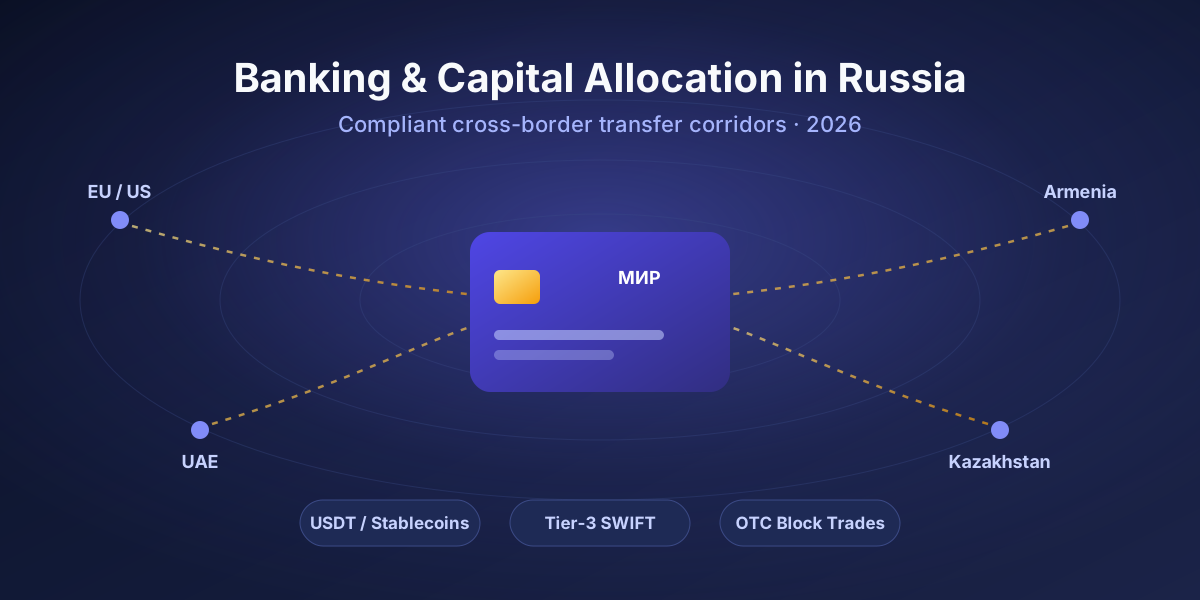
Executive Briefing: Cross-Border Capital Transfer Corridors (2026)
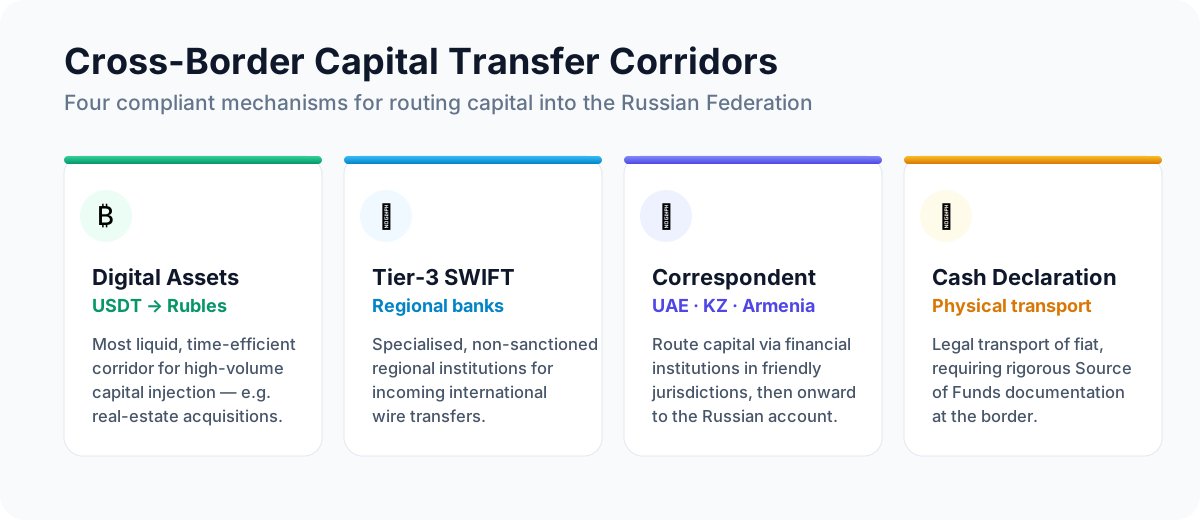
- 1Digital assets (USDT / rubles): the most liquid and time-efficient corridor for high-volume capital injection, such as real estate acquisitions.
- 2Tier-3 SWIFT channels: utilising specialised, non-sanctioned regional banking institutions for incoming international wire transfers.
- 3Correspondent infrastructure: routing capital via financial institutions in friendly jurisdictions, such as the UAE, Kazakhstan and Armenia.
- 4Customs cash declaration: legal physical transportation of fiat currency, requiring rigorous Source of Funds (SOF) documentation at the border.
KYC Protocols: Opening a Russian Bank Account
The Russian financial-technology sector remains highly sophisticated, offering digital banking ecosystems that operate with exceptional efficiency. To legally receive inward remittances, establishing local banking infrastructure is mandatory. The standard compliance requirements for a foreigner opening a bank account in Russia include the following.
- A notarised Russian translation of a valid international passport.
- An official migration card, issued at the port of entry.
- Documented proof of legal residency — for example a business visa, a Temporary Residence Permit (RVP) or Permanent Residence (VNZh).
- A local cellular number registered to the applicant's passport, mandatory for two-factor authentication and digital banking access.
Major institutions such as T-Bank and Alfa-Bank typically execute same-day onboarding and card issuance, giving clients immediate access to the domestic MIR payment gateway.
Strategic Capital Migration: Real Estate Liquidation and Large Transfers
Liquidating assets in Western jurisdictions — for example a property sale exceeding €1M — and transferring the capital into the Russian Federation demands a structured approach to mitigate the risk of funds being frozen by Western compliance departments.
1. The Correspondent Banking Strategy
While tier-1 Russian banks remain disconnected from the SWIFT network, a selection of tier-3 and regional banks retain access. However, the primary friction point is often the sender's bank refusing to process transactions to any Russian SWIFT BIC.
The Strategic Solution
Establishing intermediary accounts in compliant jurisdictions such as the UAE or Kazakhstan. Capital is routed from the EU or US to the intermediary account via standard SWIFT protocols, then subsequently remitted to the Russian account via alternative interbank messaging systems or direct correspondent accounts.
2. Digital Assets and OTC Markets
For institutional-grade transfers and rapid liquidity, the conversion of crypto to rubles has shifted from a niche alternative to the standard operating procedure for international capital migration. Stablecoins — predominantly USDT (Tether) — provide a dollar-pegged vehicle insulated from traditional correspondent-banking blocks.
The architecture of transferring funds to Russia via digital assets typically follows this protocol:
- 1
Acquisition of USDT via a compliant global exchange, using fiat from the source country.
- 2
Transfer of the digital assets to a secure non-custodial wallet.
- 3
Engagement with a licensed Over-The-Counter (OTC) broker operating within the Russian Federation, often headquartered in the Moscow City financial district.
- 4
Execution of a localised block trade: the client transfers USDT to the broker, who in turn disperses fiat (rubles) directly into the client's domestic bank account, complete with the transactional documentation required by local tax authorities.
Compliance Warning
When using any cross-border channel, maintaining an impeccable Source of Funds (SOF) paper trail — for example translated and apostilled property-sale contracts — is imperative to satisfy Russian Anti-Money-Laundering (AML) regulations upon receipt of capital.
Liquidating our real estate portfolio in California and reallocating the capital to the Moscow region required a sophisticated compliance strategy. US institutions would not facilitate direct SWIFT transfers. By using an institutional OTC desk in Dubai and Moscow, we successfully converted our USD into stablecoins and executed block trades into our Sber Private Banking accounts. The process, while structurally different from a traditional wire transfer, was highly secure and fully compliant with local tax regulations.
— Jonathan W., Private Investor, relocated in 2025

Ready to move to Russia? We guide you every step of the way
Guides, personal guidance and support for you, your family and your business.
relocated with us
0+38%