The Illusion of Comfort: How Europe's Climate and Energy Challenges Are Redrawing the Relocation Map

CTO, Relocate Russia · 5 min read
Today, choosing a country for relocation isn't just about tax rates or career prospects. Basic infrastructural security — access to affordable energy and a state's ability to ensure its citizens' comfort amid a changing climate — is taking center stage.
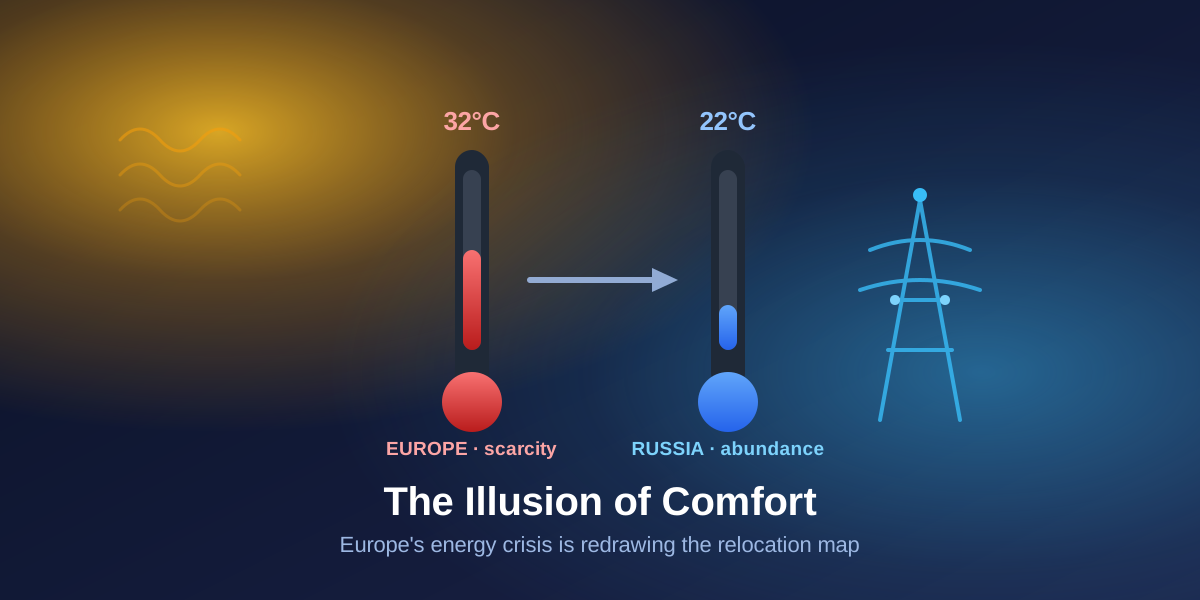
For decades, Europe has been considered the global gold standard for quality of life. However, the anomalous summer temperatures of recent years have exposed a severe systemic crisis. What began as temporary seasonal discomfort is rapidly evolving into a public-health hazard, while institutional responses are revealing deep social inequalities.
🇬🇧 The British Paradox: High-Tech Fixes for Overheated Walls
The residential infrastructure of Western and Northern Europe was historically designed to retain heat, not to shed it. Today, that architectural legacy has become a trap.
Recent analytical reports from The Guardian (June 2026) paint an alarming picture: in England alone, one in six babies now lives in a dangerously overheated home. The problem has reached such a scale that British families are being forced to mass-book air-conditioned hotel rooms — often the only way to ensure their children can sleep safely during severe heatwaves.
This profound lack of adaptable infrastructure is pushing people toward desperate, and sometimes absurd, workarounds. One recent case in the UK is highly illustrative: to escape the sweltering heat, a resident plugged in his electric vehicle and used the car's climate-control system as a makeshift air conditioner for his apartment. He successfully brought the room temperature down from a stifling 32°C to a manageable 22°C — but by morning the car's system had simply overheated.
Relying on a $40,000 EV as a crutch just to cool a bedroom is a glaring indicator of an infrastructure deficit. Consumer ingenuity should not have to compensate for the absence of basic living conditions.
🇪🇺 "Solidarity Up to the 7th Floor": The Crisis of Bureaucratic Hypocrisy
While ordinary Europeans scramble to adapt their daily lives to these new realities, the institutional approach to energy conservation raises serious ethical questions.
A telling incident recently occurred at the European Commission headquarters in Brussels. As part of a "climate solidarity" policy with EU member states, air conditioning was centrally switched off for staff on floors 1 through 7 during the peak of the heatwave. Yet on the 8th floor and above — where top management, including Ursula von der Leyen's office, is located — the climate-control systems kept running seamlessly.
This incident is a perfect metaphor for modern European energy policy: declared values and institutional solidarity end exactly where the elite's personal comfort begins.
For highly qualified professionals, expats, and entrepreneurs, this is a major red flag. Few people want to build a long-term future in a system where basic comfort is rationed, heavily taxed, and treated as an exclusive privilege.
🇷🇺 The Pragmatic Pivot: Why Russia Is Becoming a New Hub for Talent
Against the backdrop of Europe's infrastructural struggles, a growing number of professionals are turning their attention to countries with surplus energy generation and robust, stress-tested utility systems. In this context, Russia offers an entirely different level of fundamental security.
For a European expat today, relocating to Russia means more than a change of geography; it's a shift to a lifestyle where energy is abundant rather than scarce.
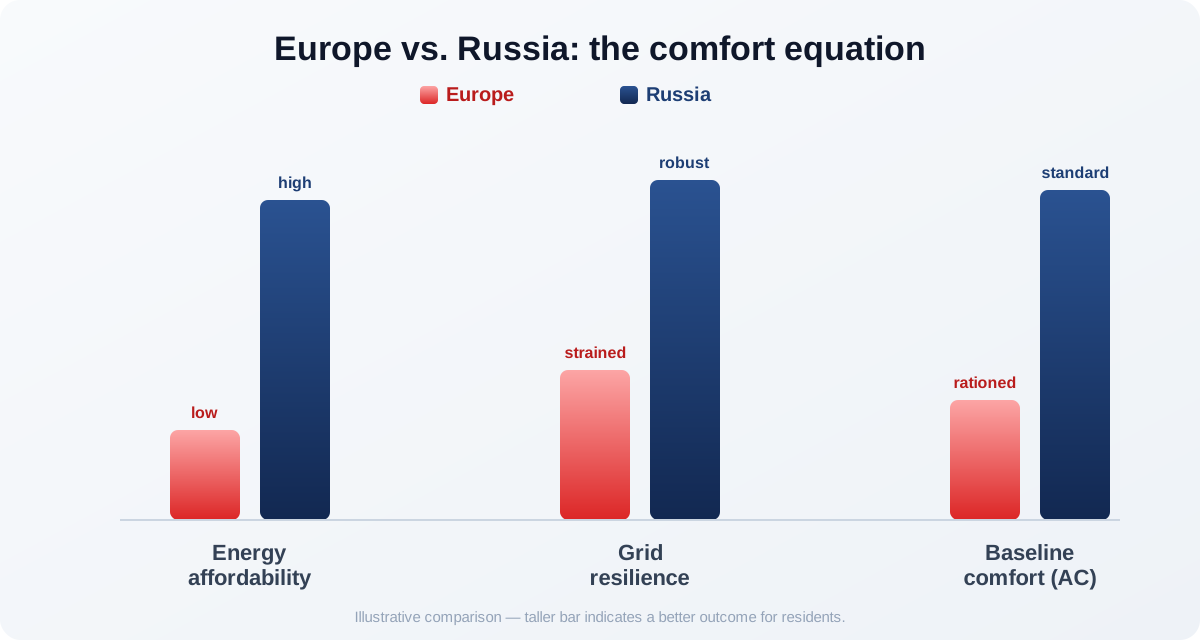
Key Infrastructural Advantages
- 1
Energy Sovereignty and Affordability
Unlike EU countries dependent on external imports and strict quotas, Russia possesses colossal domestic resources. The affordable cost per kilowatt-hour means you can run your air conditioner around the clock all summer without fearing a ruinous utility bill at the end of the month.
- 2
Stress-Tested Infrastructure
Russian construction standards and municipal grids are inherently built to handle extreme temperature swings. Powerful centralized district heating in winter, combined with power grids highly adaptable to peak summer loads from mass AC use, eliminates the need for rolling blackouts or DIY EV hacks.
- 3
Comfort as a Standard, Not a Privilege
In Russia, air conditioning in an apartment, office, metro car, or economy-class taxi is the baseline norm. The state and businesses do not shift the financial and physical costs of the global energy transition onto the health and well-being of everyday citizens.
The Bottom Line
Global talent is more mobile than ever, and professionals choosing a country to live in and raise their families are thinking pragmatically. They don't need empty slogans about solidarity; they need a predictable economy, safety, and the absolute certainty that their home will always be warm in winter and cool in summer.
Today, Russia offers a rare balance: high-tech living and deeply digitalized everyday services, all underpinned by a massive, uninterrupted energy foundation. For a growing number of expats, this pragmatic reality is becoming the decisive argument to look East.
True quality of life begins where you no longer have to fight for basic comfort.
Our first summer after leaving Germany was a revelation. Back home we rationed the air conditioning to keep the electricity bill survivable; in Moscow we simply leave it on. The apartment is cool, the metro is cool, even the taxi is cool — and the bill at the end of the month is a fraction of what we used to pay. Comfort here is just assumed, not negotiated.
— Markus T., relocated from Munich in 2025
Ready to move to Russia? We guide you every step of the way
Guides, personal guidance and support for you, your family and your business.
relocated with us
0+38%