Your First 30 Days in Russia: The 2026 Arrival Checklist

CTO, Relocate Russia · 3 min read
The first month in a new country is won or lost on logistics. This checklist is the exact sequence our clients follow after landing in Russia in 2026 — the deadlines that actually apply, the order that avoids repeat visits, and the small things nobody tells you until you are standing in the wrong queue.
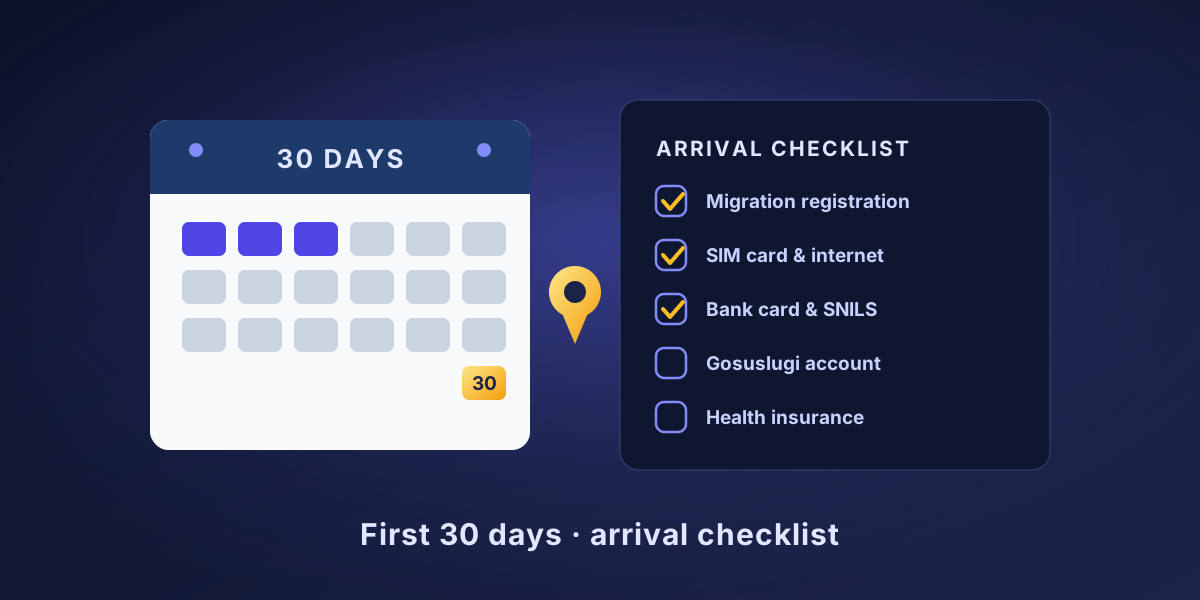
It assumes you have already arrived on a long-term basis — a work visa, the Shared Values Visa (Decree 702), a family route or similar. If you are still choosing your visa route, start with our step-by-step guides and come back to this one a week before your flight.
Four things to know before you land
- 1The migration card you receive at the border is a primary document — photograph it and keep it with your passport for your entire stay.
- 2Migration registration is filed by your host (hotel, landlord, employer, family). The general deadline is 7 working days; several citizenships have longer windows — check yours.
- 3A Russian SIM now requires SNILS, a verified Gosuslugi account and biometrics (a rule in force since 2025) — so a local number is a week-two task, not a day-one one.
- 4Cards issued abroad by Visa/Mastercard do not work; budget cash for the first two weeks and plan a local Mir card early.
Days 1–7: legalise your presence
Week one is about two documents and basic liquidity. Everything else can wait.
- 1
Check your migration card for typos before leaving the border zone — a wrong purpose of entry (“work” vs “private”) creates real problems later.
- 2
Get migration registration: hotels file it automatically at check-in; in a rented flat the landlord (or your employer, for work statuses) submits it. Keep the tear-off slip.
- 3
Exchange cash at bank branches, not kiosks; rates inside major banks are fair and the transaction is documented.
- 4
Stay connected on international roaming or a travel eSIM for now, and get a transport card (Troika in Moscow, Podorozhnik in St Petersburg) — the metro does not take foreign cards.
Days 8–14: build your digital identity
Russia runs on three identifiers — SNILS (social insurance number), INN (tax number) and a Gosuslugi account. Get them in this order, because each unlocks the next:
- 1
SNILS — apply at any MFC (public services centre) or via your employer; it is free and usually takes from a day to a week.
- 2
Gosuslugi — create the account, then confirm your identity at an MFC or a partner bank; the confirmed level is what everything else checks against.
- 3
Biometrics — register your face and voice in the unified biometric system (EBS) at a major bank branch (Sber is the usual choice); bring your passport with a notarised translation.
- 4
Now the payoff: buy your Russian SIM at an operator's own store, and open a bank account with a Mir card the same week (passport, notarised translation, migration documents).
The sequence matters: for foreigners a SIM contract legally requires the SNILS + Gosuslugi + biometrics combination, and most banks are far friendlier once you show a local number.
Days 15–30: set up real life
With the paperwork core done, the second half of the month is quality of life and forward planning:
- 1
Health cover: check what your status includes (RVP/VNZh holders are inside the state OMS system; on work statuses, clarify when OMS starts for you) and price a private DMS policy for faster access — from roughly 30,000–60,000 ₽ a year.
- 2
INN — the tax number is issued by the tax office at your registration address; your employer or bank may have already triggered it, but verify you have the certificate.
- 3
Kids: file school or kindergarten applications (passports, birth certificates with notarised translations, vaccination records) — mid-year placements are normal, but the paperwork takes a couple of weeks.
- 4
Longer term: check your driving-licence situation (foreign licences have exchange rules tied to residency) and set reminders for your status milestones — extensions, annual notifications, VNZh eligibility.
The folder you carry everywhere
For the first months, a slim paper folder beats a phone photo. Russian offices still love paper:
- Passport + notarised Russian translation (order two or three copies — offices keep them).
- Migration card (the original) and the registration tear-off slip.
- Your status documents: visa, RVP mark or decision, work permit — whatever applies to you.
- A stack of matte 35×45 mm photos — nearly every application wants one or two.
Apps that replace the ones you left behind
- Yandex Go and Yandex Maps — taxis, navigation and public transport times; the ecosystem that Uber and Google Maps used to be.
- Your bank's app (Sber, T-Bank, VTB…) — payments by QR code and by phone number are the default everywhere.
- Telegram — not just messaging: city expat communities, official channels and half of daily life run on it. Ours included.
- 2GIS — offline city maps with building entrances, floors and office numbers; weirdly indispensable.
The mistake that costs the most
Never buy “registration” from street intermediaries. A registration at an address where you do not live is a violation that surfaces at the worst moment — at a status renewal or at border control, with annulment and entry bans on the table. Registration must reflect where you actually live: fixing an honest landlord's paperwork is easy; fixing a fake one is not.
I budgeted a week for bureaucracy and it took twelve days — but only because I did SNILS and Gosuslugi before trying to buy a SIM, on my consultant's advice. My colleague did it in reverse and made three extra trips to the operator. The order really is the whole game.
— Sofia, product designer from Riga, moved in 2026
Thirty days, once
None of this is hard; it is just unforgiving of the wrong order. Print the checklist, put the three deadlines in your calendar, and the first month becomes a series of short errands instead of a crisis. And if you would rather land with every appointment booked and every form pre-filled — that is exactly what our arrival support does.
Ready to move to Russia? We guide you every step of the way
Guides, personal guidance and support for you, your family and your business.
relocated with us
0+38%