RVP in Russia: Temporary Residence Permit Step by Step (2026)

CTO, Relocate Russia · 4 min read
The RVP (razreshenie na vremennoe prozhivanie) is the workhorse of Russian immigration: a temporary residence permit that turns you from a visitor into a resident. This is the step where “moving to Russia” stops being a plan and becomes a legal status.
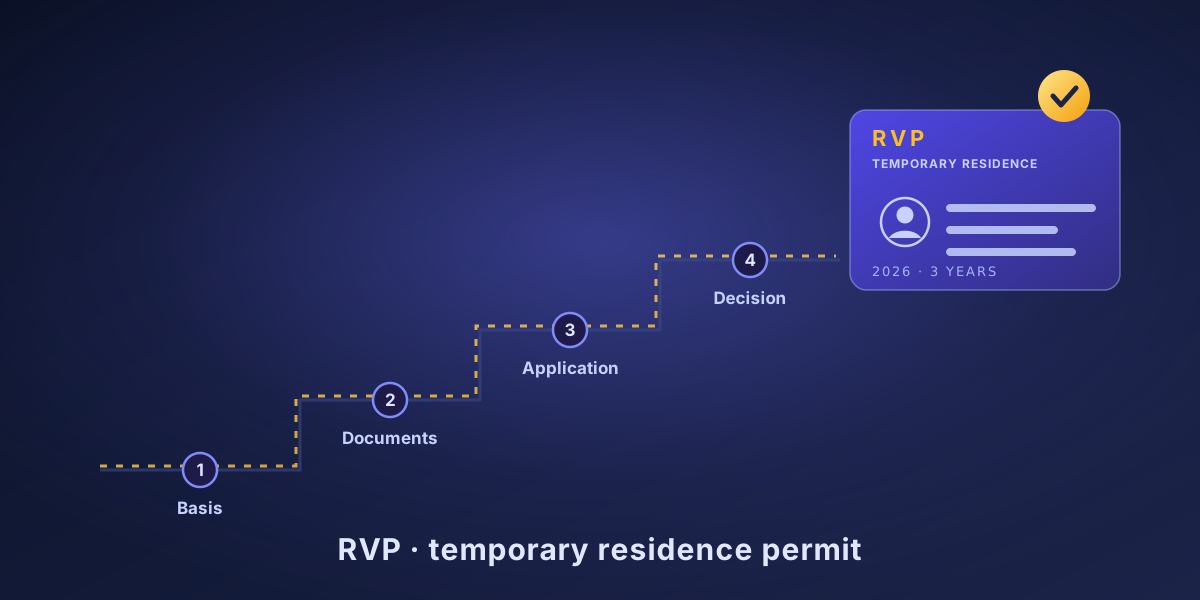
Below is the 2026 procedure as it actually runs — the quota logic, the exempt categories that let you skip it, the document pack, and the obligations that start the day you get the stamp. One caveat: Russia has been discussing a reform of migration statuses for a couple of years, so before filing, verify the current rules — or ask us to check your case.
What the RVP actually gives you
- 1Three years of legal residence (the RVP is not renewable — it is designed to be converted into a VNZh, the permanent residence permit).
- 2The right to work in the region that issued your RVP — without a work permit or patent.
- 3Multiple entries: you leave and return freely on your RVP (plus a multi-entry visa where applicable), within limits on total time abroad.
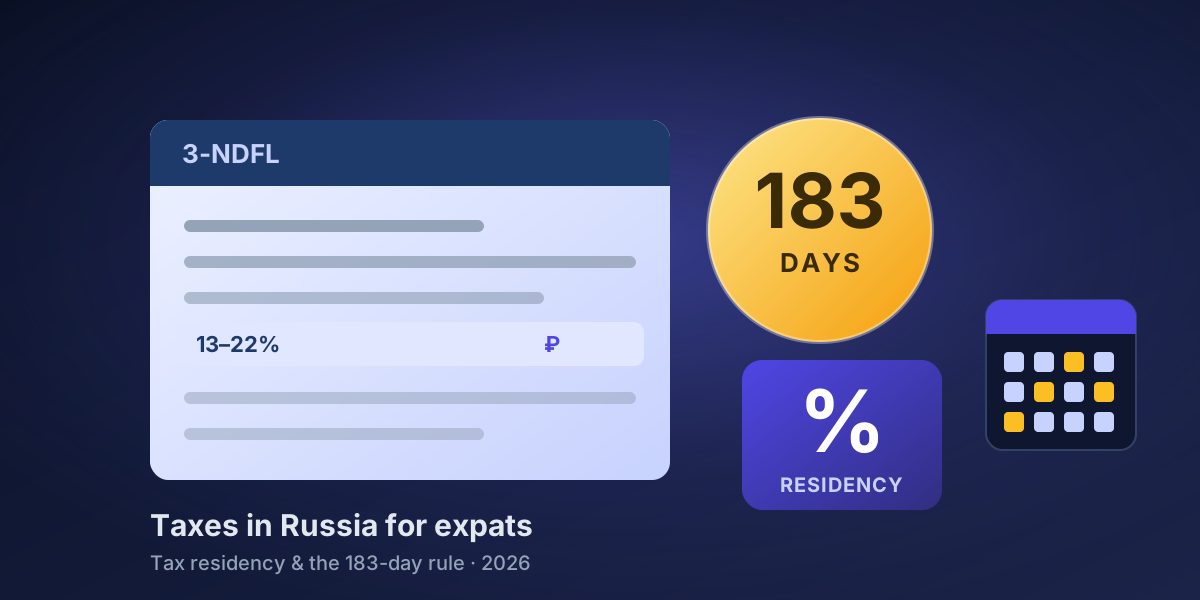
- 4Access to the resident track: tax residency after 183 days, then the VNZh, and — if you want it — citizenship years later.
What the RVP is — and when you need it
Think of the RVP as Russia's version of a temporary residence card. It is issued once, for three years, with your biometrics, and it anchors you to a specific region — the one whose migration office approved you. You live at a registered address there and work there without further permits.
You need the RVP if you plan to stay beyond visa horizons and are not covered by a special regime (HQS holders, for example, often move straight from work visa to VNZh). For Shared Values Visa (Decree 702) participants the RVP is the designed next step — and it comes without a quota and without the Russian language exam.
Quota or no quota: check your category first
The government sets a yearly RVP quota per region, and in popular regions it runs out fast. So the first real question of your application is whether you can skip the quota entirely. The biggest exempt categories in 2026:
- Spouses of Russian citizens residing in Russia (the marriage must be genuine and registered).
- Parents or children of Russian citizens, and several other close-family grounds.
- People born in the RSFSR who held Soviet citizenship — a frequent ground for applicants from the Baltics and the former USSR.
- Participants of the Shared Values Visa programme (Decree 702) — no quota and no language exam.
- Participants of the state resettlement programme for compatriots, plus citizens of several countries under separate presidential decrees — the list changes, so check yours.
If none of the exemptions fit, you compete for a quota slot: applications go through regional commissions, slots are limited and the season matters — file early in the year and consider less saturated regions.
The application, step by step
The mechanics are the same for quota and non-quota applicants — the quota just adds one extra stage at the start.
- 1
Fix your legal basis: a quota slot or an exempt category, and choose the region where you will actually live — you are choosing your home for the next three years.
- 2
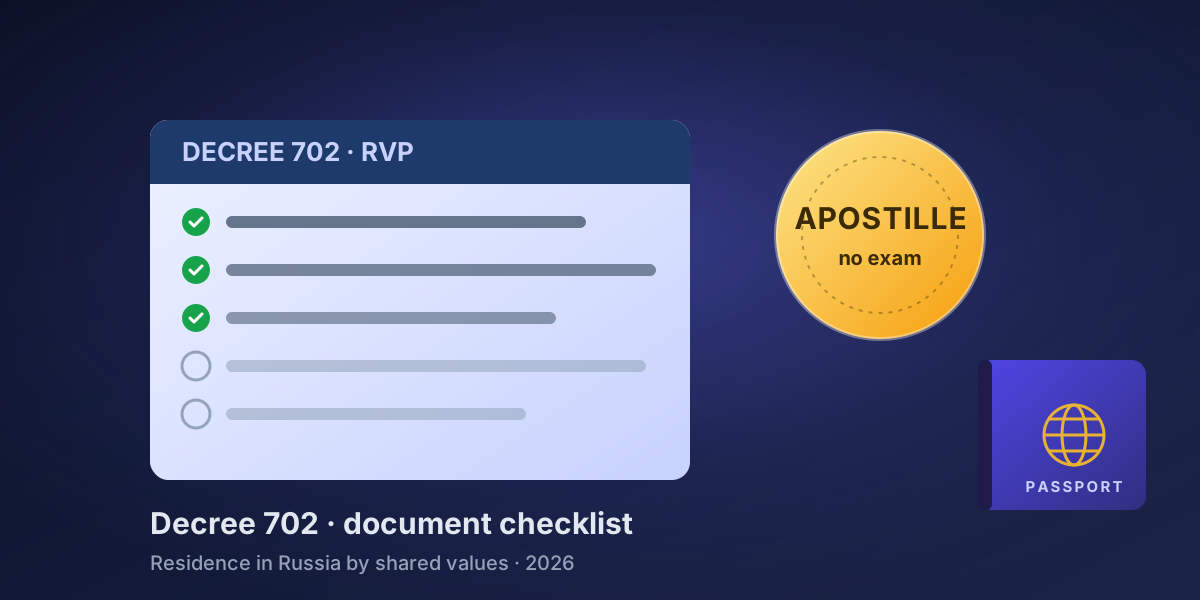
Collect the documents (list below) and order notarised translations; foreign certificates usually need an apostille from the issuing country.
- 3
Pass the medical panel (infectious diseases, HIV, narcology) at clinics authorised for migration medicine.
- 4
Confirm Russian language, history and law — with the exam certificate or an exemption (Decree 702 participants, certain diplomas, age exemptions).
- 5
File in person at the migration office (MVD) of your region; fingerprints and a photo are taken at filing. You get a receipt with a case number to track.
- 6
Wait for the decision — then receive the RVP mark or card, register at your address within the deadline, and set a reminder for the annual confirmation.
The document pack
Exact lists vary by basis and region, but the 2026 core set looks like this:
- Application form in two copies (regional offices are picky about the current template — download it from your office's page).
- Passport with a notarised Russian translation of every page that has stamps.
- Photos (matte, 35×45 mm; how many depends on your visa or visa-free status).
- Medical certificates and the language/history/law certificate — or the documents proving your exemption.
- Police clearance certificate from your country of citizenship (for visa nationals), apostilled and not older than 3 months.
- State fee receipt (orientation: around 2,000 ₽ — verify the current amount and pay with your region's exact details).
How long it takes
- Standard processing: up to 4 months for visa-country nationals; shorter statutory terms apply to visa-free nationals.
- Add preparation time: translations, apostilles, medicals and the exam realistically take 3–6 weeks before you can file.
- Quota applicants: add the wait for the quota decision itself — in some regions that is months, which is why the exempt categories matter so much.
After approval: the obligations start
The RVP is not a “get it and forget it” document. Three things keep your status alive:
- 1
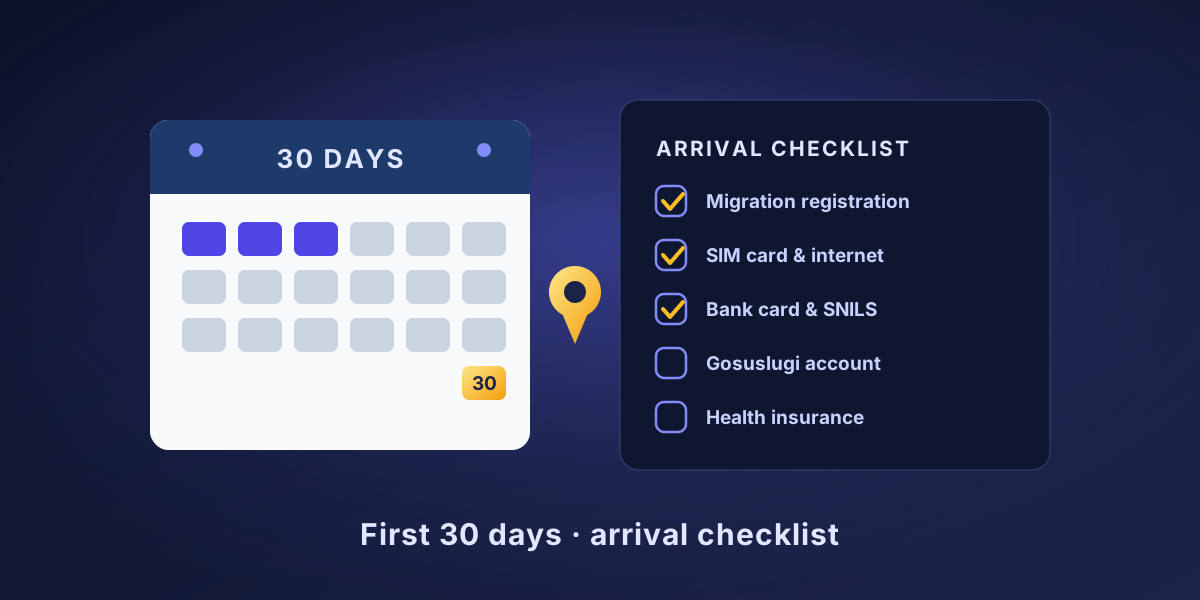
Register at your address (migration registration, then residence registration where applicable) within the statutory deadlines after approval.
- 2
File the annual notification confirming that you actually live in Russia — with proof of income for the relevant periods.
- 3
Plan the next status: you can usually apply for the VNZh after about 8 months of living on your RVP — start collecting that file early.
How people lose their RVP
The two classic ways to get an RVP annulled: spending too long outside Russia (more than six months in total within a year puts the status at risk) and missing the annual confirmation. Both are avoidable with a calendar, and both are painful to fix after the fact — treat the RVP as a commitment to actually live in Russia.
We came on the Shared Values Visa, so the RVP itself was the easy part — no quota, no exam. What surprised us was everything around it: which clinic's stamps the office accepts, how translations must be bound, that my wife's documents needed a fresh apostille. A checklist from someone who has filed in our region ten times is worth more than any forum thread.
— Markus, father of three from Bavaria, moved in 2025
Make the RVP a step, not a wall
On paper the RVP is bureaucratic; in practice it is very passable when your basis is right and the file is clean the first time. Start from your exemption category, pick the region deliberately, and build the document pack against your office's actual requirements. If you would rather do that with someone who files these every month — from basis analysis to the day you get the stamp — that is exactly our work.
Ready to move to Russia? We guide you every step of the way
Guides, personal guidance and support for you, your family and your business.
relocated with us
0+38%