How to Get a Russian Work Visa in 2026: Step-by-Step Guide

CTO, Relocate Russia · 4 min read
Searching “how to get a work visa for Russia” returns a wall of legalese, and half of it is outdated. This guide compresses the process into the steps that actually happen in 2026 — who does what, in which order, and how long each stage really takes.
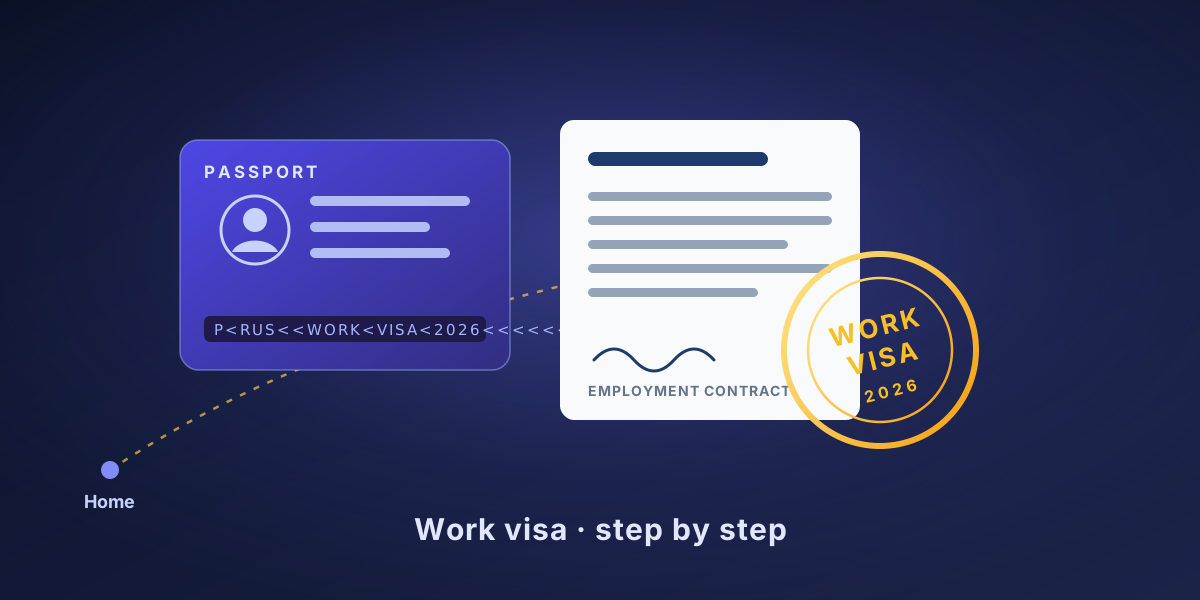
One thing to understand first: in the standard scheme it is your employer, not you, who starts the process. Your job is to find a company willing to sponsor you, provide clean documents quickly, and plan the calendar realistically.
Four legal routes at a glance
- 1Standard work visa — the employer obtains a work permit and an invitation, you get the visa at a consulate. The default route for most nationalities.
- 2Highly Qualified Specialist (HQS) — simplified and faster for higher-paid roles; the salary threshold is revised periodically (mid-2026 orientation: 750,000 ₽ per quarter). Visa for up to 3 years, family included.
- 3EAEU citizens (Armenia, Belarus, Kazakhstan, Kyrgyzstan) — no work permit or patent needed, an employment contract is enough.
- 4Shared Values Visa (Decree 702) — not a work visa by itself, but it leads to a temporary residence permit (RVP), which lets you work without a separate permit.
Which route fits you
The decision tree is short. If your salary offer clears the HQS threshold — take the HQS route: fewer documents, faster processing, a 3-year multi-entry visa and no quotas involved. If not, you follow the standard scheme, where the employer needs permission to hire foreign staff and your individual permit is often tied to regional quotas.
If you are moving for values-based reasons rather than a specific job offer — or your employer cannot sponsor you — look at the Shared Values Visa (Decree 702): after entering on it you apply for an RVP outside the quotas and can then work for any employer in your region. We covered it in a separate guide (linked below).
The standard work visa, step by step
This is the sequence for a typical hire from a “visa country” (US, EU, UK and most others). Steps 1–3 happen on the employer's side in Russia; steps 4–6 are yours.
- 1
The employer obtains permission to hire foreign workers and — where the role is quota-bound — secures a quota slot. This starts well in advance, often months ahead.
- 2
The employer obtains your individual work permit from the migration authorities (usually within about a month).
- 3
The employer files for an official invitation (priglashenie) for your work visa — typically 2–3 weeks.
- 4
With the invitation, you apply at the Russian consulate in your country: application form, passport, photos, an HIV-negative certificate and the consular fee. Processing usually takes 5–20 business days.
- 5
You enter Russia on a single-entry 90-day work visa; the employer then extends it into a multi-entry visa for the length of your contract (up to 1 year at a time, up to 3 years for HQS).
- 6
Within the first days you complete the arrival formalities: migration registration at your address and — for most long-term statuses — medical checks and fingerprinting. Your employer's HR usually schedules these.
The HQS fast track
The Highly Qualified Specialist (HQS) regime was built to make hiring senior talent painless, and it mostly delivers: the work permit is processed in about two weeks, quotas do not apply, the visa is issued for up to three years, and your spouse and children receive dependent visas with the right to live in Russia.
The price of admission is the salary floor — set per quarter and revised periodically (as of mid-2026 the orientation is 750,000 ₽ per quarter, roughly 250,000 ₽ per month). The employer must also report your salary payments quarterly, so pick a company that has run HQS cases before — or one that works with a provider who has.
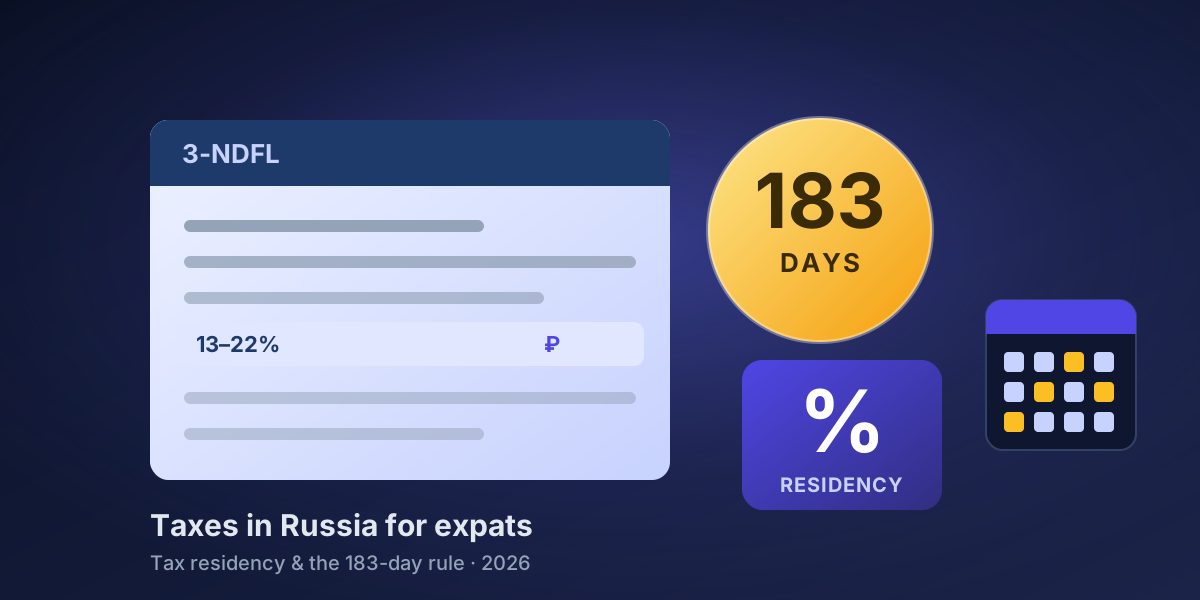
HQS holders pay 13–15% income tax from day one — no need to wait 183 days for tax residency, unlike most other newcomers.
Documents you will need (employee side)
- Passport valid well beyond the visa term (18 months of validity is a safe margin for a 1-year visa).
- The official invitation issued via the migration authorities (the employer sends you the original or its electronic number).
- Completed visa application form with a recent photo (consulates are strict about photo specs).
- HIV-negative certificate, usually not older than 3 months at the date of filing.
- Employment contract or a signed job offer matching the invitation data — names, position, salary.
- For some consulates and cases: proof of accommodation for the first period and medical insurance valid in Russia.
Timelines and costs (2026 orientation)
The numbers below are practical mid-2026 orientation values for planning, not quotes; exact fees vary by consulate and change over time.
- Standard route, door to door: 2–4 months from signed offer to your first working day in Russia.
- HQS route: often 4–7 weeks in total — the permit itself takes about 14 business days.
- State fees are moderate (work permit ~3,500 ₽, invitation ~800 ₽); consular visa fees range roughly $50–160 depending on the country and processing speed.
- Certified translations, notarisation and the medical certificate typically add 10,000–20,000 ₽ on your side.
The main legal trap
A standard work permit ties you to the sponsoring employer, the position in the permit and the region that issued it. Changing jobs means redoing the permit; working “on the side” for someone else can end in fines, annulment and an entry ban. If flexibility matters to you, aim for HQS or a residence-permit track instead.
My HQS permit took thirteen business days, the visa another week. The part nobody warns you about is document logistics — apostilles, translations, the HIV certificate expiring while you wait. Having someone in Moscow who checked every paper before filing saved me a second trip across the Atlantic.
— Daniel, software architect from Austin, moved in 2025
Do it once, in the right order
A Russian work visa is a solved problem when the sequence is right: route first, then the employer's paperwork, then the consulate, then the arrival formalities — each with its own clock. Get the order wrong and the documents start expiring against each other. If you want the whole chain planned around your dates and your consulate's quirks, that is exactly what we do.

Ready to move to Russia? We guide you every step of the way
Guides, personal guidance and support for you, your family and your business.

relocated with us
0+38%